
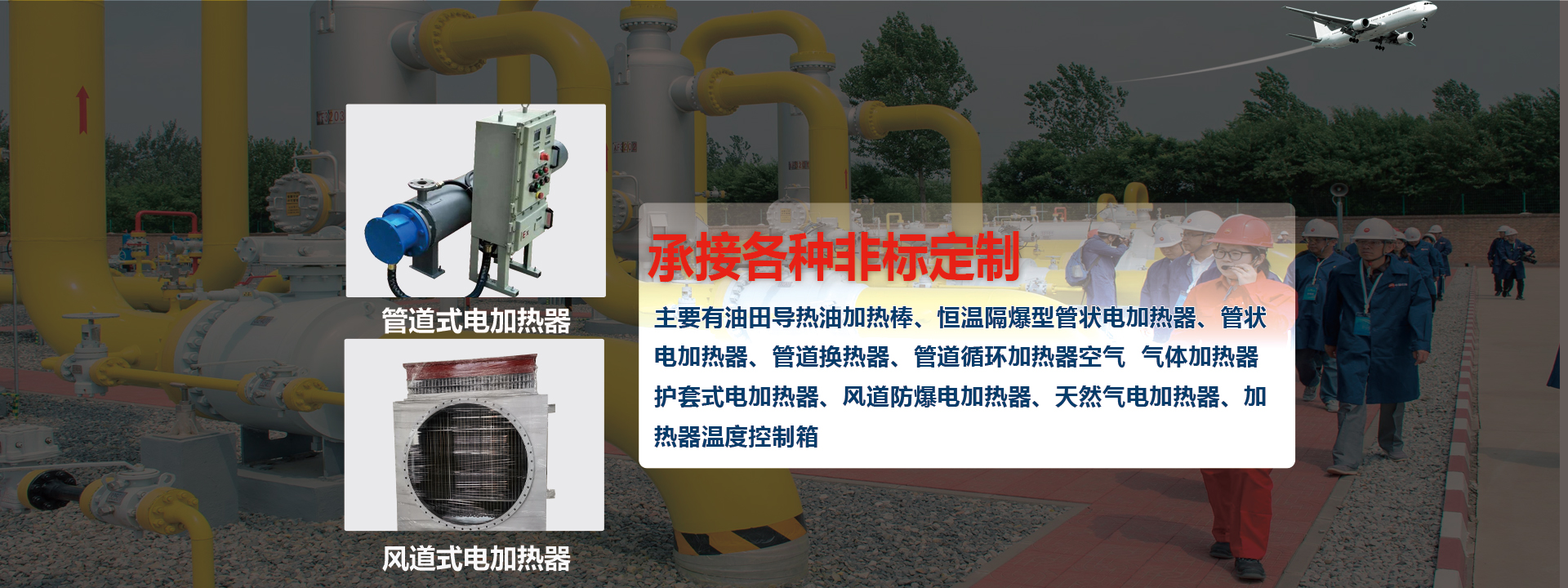
is a heating device widely used in industrial, commercial, and residential fields. They are typically used for direct heating of liquids, gases, chemicals, and other media, or for indirect heating of spaces through air. The following is key information about sheath-type electric heaters:
Structure and Working Principle
Structure: A sheath-type electric heater mainly consists of a metal sheath (usually stainless steel or other corrosion-resistant material), an internal resistance wire, and insulating material filled between them. The resistance wire is the part that actually generates heat, while the sheath protects the resistance wire and transfers heat to the heated medium.
Working Principle: When current passes through the resistance wire, heat is generated according to Joule's law. This heat is transferred to the sheath through thermal conduction and ultimately to the medium that needs heating. The design of the sheath allows it to be directly immersed in liquids or embedded in solid materials, achieving efficient heat transfer.
Application Fields
Industrial Applications: Such as heating of reactors, storage tanks, and other containers in industries like petroleum, chemical, and food processing; pipeline heat tracing systems.
Commercial and Residential Applications: Including hot water supply systems, pool heating, auxiliary heating elements in air conditioning systems, etc.
Special Applications: For example, heating needs under specific experimental conditions in laboratories.
Advantages and Features
High Efficiency and Energy Saving: Due to its compact design and good heat transfer efficiency, it can quickly reach the required temperature and maintain stability.
Safe and Reliable: High-quality insulating materials ensure electrical safety and prevent leakage risks.
Easy Installation and Maintenance: Simple design facilitates integration into existing systems and convenient maintenance.
Long Service Life: Use of high-quality materials ensures a long service life.
Usage Precautions
Correct Power Selection: Choose the appropriate power level according to the specific application to avoid overload operation.
Regular Inspection and Maintenance: Ensure the heater and its connecting parts are in good condition, and promptly clean any dirt or deposits that may affect heat transfer efficiency.
Pay Attention to Operating Environment: Ensure the usage environment meets the manufacturer's recommendations, especially in humid or corrosive environments where additional protective measures should be taken.
Environmental and Safety Considerations
When designing and selecting sheath-type electric heaters, it is very important to consider environmental protection and energy efficiency. Choosing products with high energy efficiency ratios can help reduce energy consumption and lower operating costs.
At the same time, attention should be paid to the safety performance of the product to ensure safe use under various conditions, such as having over-temperature protection functions.
If you are looking for more in-depth technical details, product selection guides, case studies, or other related information, please provide more specific requests, and I will do my best to assist you.